Yesterday we released the Spike Protection http://mtgolibrary.blogspot.com/2015/11/spike-protection-tool.html. Since that we have been monitoring the bots and the trades closely and we have to say we are pretty happy with the results so far. The Spike Protection resulted in a smaller number of bad trades (think "Profit Log") and neat larger profits on almost all the bot chains.
We noticed two things though:
- spike protections triggered a bit too much, resulting in some false positives
- card rotation was slower
The two effects were largely attended. ML Bot 10.56 slightly soften the protection in order to have less false positive and faster card rotation.
We recommend to experiment a bit with Spike Protection but to allow AT LEAST 2 days keeping the same settings before saying "it's good / not good". This is because the mtgo market has ups and downs depending on the day of week and for sure on Friday you will do less trades than Sunday - regardless of your Spike Protection settings.
Enjoy!
Saturday, November 14, 2015
Thursday, November 12, 2015
MTGO Library Bot 10.55
Today we released ML Bot 10.54, with the Spike Protection tool http://mtgolibrary.blogspot.it/2015/11/spike-protection-tool.html
There was a crash happening on some LITE bots - we have just fixed it and released the update.
Spike Protection Tool
Have you ever been in this situation: a
card spikes in price, and your bot buys at the new high price just as
the card drops back down? You end up losing money because your bot's
been tricked by a temporary spike in value.
Spikes are quite common on MTGO and we
know that they pose a big risk for botters.
The Spike Tool uses a heuristic to spot
sudden increases in price on cards valued over .5 tix. When a card
spikes in price, the bot will keep the buy price at the lower
pre-spike price.
A similar safety net will be applied if
a card spikes DOWN in price. The bot will keep the sell price at the
higher pre-spike price.
The Spike Tool will be automatically
activated on all bots starting today. We've initialized the tool with
some light parameters. We recommend that you keep it active for the
next few days and adjust it as needed.
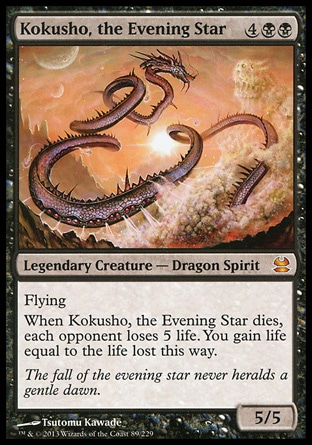
I hope there's not a Return to Kamigawa
It's pretty well known by old timers and regular readers of Mark Rosewater articles that Homelands is considered the "worst Magic set" by Wizards of the Coast.
I'm going to challenge that idea with this, Kamigawa was the worst block, and all three sets are worse than Homelands.
Mark Rosewater argues that Homelands failed on flavor and power. Kamigawa only failed on power. This is an accurate statement but it's not a valid arguement to reach the conclusion that Homelands is the worse set.
For example, being last place in all categories on an employee evaluation isn't good, but it's sure better than being the guy that has a 10 out of 10 on not controlling anger. I suppose the point is that "scoring" a set is not 50% flavor and 50% power.
I'm saying Kamigawa was the worst because the flavor wasn't absent (like WOTC claims is the case with Homelands) it's just a bad taste. The mythology of Kamigawa block was so typical of other games, in fact, I remember a game called Legend of the Five Rings that I played in Junior High, that had the exact same theme as Kamigawa block. To me Kamigawa was a block that beat a dead horse. It had been done everywhere and just wasn't great.
So the lack of Homelands flavor is much better in my opinion of the public bathroom flavor of Kamigawa.
Second, the power level.
Granted, Homelandicap was a word that was used to describe a rule that players had to play with cards from each set because no one use cards from certain sets....cough couch homelands cough
Had Homelands been compared cards from other sets (specifically creatures) they were about the same. They weren't insane and weren't great (no creatures really were).
It's been acknowledged that earlier Magic design was much different than current design. Early design produced far too many overpowered spells and a lot of weak (by todays standards) creatures. Homelands was bad, but it was just like other sets.
Additionally, when you come off the most powerful standard ever (excluding combo winter) you can't produce a set like Kamigawa, Wizards should have ramped power down over a few blocks if power creep is really a concern.
Anyway, worst block ever: Kamigawa. I hope we never go back there. (Seriously, in Saviors the mechanic was "7 cards in hand" and "hand size matters". I can't even think of a better way to prevent people from playing Magic during a game of Magic than with a stupid mechanic like "hand size matters".
What deck should I play?
Hi Everyone!
This week I have been playing various formats. Mostly Modern, Legacy, and Pauper. Pauper is one of those sort of out of the way formats that doesn't get played a lot in paper.
Pauper is a format where all the cards are common rarity. This makes for an interesting set of challenges.
There are all kinds of combo, control, and aggro decks in pauper. Many are very competitive and powerful decks.
Moments before I sat to write this article I was playing a game of Pauper and realized my opponent was playing "Delver". This was only significant because the deck exists in every format...literally. Travis Woo recently did a Standard "delver" deck using Honored Hierarch. I don't remember how it played out, but it's the idea of "delver" that's everywhere.
Delver strategy basically plays low mana cost (or delve creatures) and counterspells and cantrips to defeat the opponent.
Anyway, the purpose of this article is to point out that the deck is everywhere and to ask why? It must be good if it exists in every format including Vintage and Legacy. In fact, when treasure cruise was in the format it was the best deck (even over Pod when it was a Modern deck) in Modern AND Legacy. Insanity!
Yeah, Treasure Cruise was too good, but the power of the delver deck shouldn't be overlooked. It's powerful and exists in all formats.
It's just a hypothesis, but maybe Delver type decks are the best decks because they do exist everywhere. I'm no expert but it's odd that one deck archetype exists everywhere.
This week I have been playing various formats. Mostly Modern, Legacy, and Pauper. Pauper is one of those sort of out of the way formats that doesn't get played a lot in paper.
Pauper is a format where all the cards are common rarity. This makes for an interesting set of challenges.
There are all kinds of combo, control, and aggro decks in pauper. Many are very competitive and powerful decks.
Moments before I sat to write this article I was playing a game of Pauper and realized my opponent was playing "Delver". This was only significant because the deck exists in every format...literally. Travis Woo recently did a Standard "delver" deck using Honored Hierarch. I don't remember how it played out, but it's the idea of "delver" that's everywhere.
Delver strategy basically plays low mana cost (or delve creatures) and counterspells and cantrips to defeat the opponent.
Anyway, the purpose of this article is to point out that the deck is everywhere and to ask why? It must be good if it exists in every format including Vintage and Legacy. In fact, when treasure cruise was in the format it was the best deck (even over Pod when it was a Modern deck) in Modern AND Legacy. Insanity!
Yeah, Treasure Cruise was too good, but the power of the delver deck shouldn't be overlooked. It's powerful and exists in all formats.
It's just a hypothesis, but maybe Delver type decks are the best decks because they do exist everywhere. I'm no expert but it's odd that one deck archetype exists everywhere.
Wednesday, November 11, 2015
A Battle for Zendikar Sealed Deck Review
I played this Sealed Deck tournament on MTGO
I asked the YouTube viewers for comments and I got an extra excellent one from my old Limited buddy Dominik (Witchkingx5).
He did some excellent analysis on the deck building and I felt that I should share it with you.
Reviewing Dan's BFZ Sealed Deck #4
First of all, I wanted to talk about the different options of this sealed pool - every color has very interesting options, and I found it not that easy to narrow down the entire pool into a in all means convincing 40 that can be narrowed down. Let's look t all the options first, shall we?
Starting with white, it has the most impactful card in the entire format, Quarantine Field, that's probably the most desirable card to open, and if we can play it, we're usually golden and it's pretty much always amazing, since sealed Decks mostly rely on bombs, specifically bomb creatures, to do the job.
Unfortunately, that's pretty much about it, we can usually expect very good common removal spells from white, but except for a lone Smite the Monstrous, there really is nothing else, the only other cards white has to offer are the Griffin and Lithomancer's Focus, which are fine, but by no means great cards. I'd probably pass on white if possible.
Blue, on the other hand, is quite the opposite - it does not really contain any bombs, but a decent amount of overall solid cards, plus a nice package of colorless cards, two copies of Mist Intruder, Spell Shrivel and an Eldrazi Sky Spawner, the entire pile being rounded out by Coastal Discovery. Blue, while still not very powerful on it's own, opens up different routes of synergies that the Sealed Deck could follow, but does not really provide us with a clear signal that it must be played.
Black is actually just amazing though. We have Grip of Desolation, which is arguably the best Uncommon in the Set, other removal in Bone Splinters and Complete Disregard, solid creatures, and some engine cards in Vampiric Rites and Complete Disregard. The Rites are very good im Green/Black, since we can use all the tokens, but it's still a fine card with any other colors that has at least some token producers. The thing is, we often end up playing just dorky creatures that are almost useless in a format where the endgame is dominated by Eldrazi, Rites provides you with the option to cycle through your Deck, ideally while chumping something big on the ground and ideally hitting them in the air, while drawing extra cards off of virtually dead creatures and tokens. It also helps us dig for answers, since there are huge threats that need to be dealt with, and having repeatable card draw, albeit slow and conditional, is useful in that regard as well.
Then we have red, not deep at all, and a Rolling Thunder, tempting us to make an unreasonable decision to play horrible cards with it. No, not all red cards in this Pool are terrible, but there is no real synergy and not a lot to work with, so we are only left with colorless and green cards.
As the last of the five colors, we always hope to get positively surprised by some awesome cards, but unfortunately, green is very medium in this pool, there just isn't much, some aggressive cards, some token producers, come converge cards, but nothing really pulling us in any clear direction.This makes the process of choosing colors quite simple, as Blue and Black seem to be the most playable ones, but I'll briefly mention some different builds later.
Lastly, let's look what the colorless pile has to offer. Endless One is always amazing to open since it's playable in basically any Deck, and has some synergies in certain builds, so it's a "free" playable when you open it, since it's very rarely actually bad. There are tons, and I mean tons of lands, multiples of the spell lands from each color like Mortuary Mire, an Ally Encampment which is fairly negligible, a pretty much always playable Ruin Processor, and also, which is really really like, a blighted land fro both black and blue. While I think that the black one is more of a constructed card than limited one, especially in sealed where you can expect Eldrazi Scions on your opponent's side of the board pretty much every match, I do really like the blue one and I think it might be the strongest one for sealed.
Considering all of these things, I really think that it's actually the colorless cards of this Sealed Pool that push is in the direction that Dan went in, which is Blue/Black, we get to play a whole bunch of lands with abilities. But do I agree on the choice of cards that Dan made? Let's see where our minds differ and where we are on the same page:
First of all, if you go control, you should go full on control. You have some dorks, but you have an opportunity to go for a more synergistic Deck, by playing Vampiric Rites, Bone Splinter and especially, Grave Birthing, a really underrated card by a lot of players. You only have the Ruin Processor, but it really is about the token and the cycling. What would a Deck like that look like, what would I cut? Well, let's start with the most basic thing - we are playing 18 lands, and although we can cash 2 of these in, it's still quite a lot, so why are we playing the Hedron Archive? Does this Deck really gain something by being able to ramp from 4 to 7, do the payoff cards offset the extreme board disadvantage we can often fond ourselfs in when playing a card on turn two that does not affect the board in any way whatsoever, in a Deck that does not play a lot of creatures and is probably gonna have to approach most board situation by being behind on creatures? The thing is, Hedron Archive is one of these cards, that's never really bad, at worst it's a really expensive Divination, but what does it actually DO in this Deck? I would much rather have cards that affect the board or make our synergies better, than a worse Mind Stone, so Hedron Archive is in the end just a card that's fine, but not really good and should be cut if there's something better. Then, I would probably cut a Mist Intruder, since it is a flyer, but as you mentioned a whole lot of times, you don't get much out of the processing, and by playing grave birthing, you make a card like bone splinters actually fine again, since you have things like carrier thrull to sacrifice it to. As a last card to cut, it would probably be the 5 mana menace guy, he's really good in an aggro Deck, but in a control Deck where you sacrifice your own creatures for benefit, he doesn't really do a lot. So, why do I think we should go this route?
My goal was to build a control Deck with a small sacrifice theme, and I'm not sure if you overlooked that, but since we have so much card draw, a more unexpected card can really become an all-star of the Deck: Mortuary Mire. At worst, it's a tapped Swamp, but at best it can reclaim a Carrier Thrull/ Eldrazi Sjyspawner to sacrifice to our Bone Splinters or Vampiric Rites, or we can bring back one pf our big finishers. This Deck has huge inevitability, and shouldn't bother with cards like Hedron Archive at all and go full on control, since it does have a lot of very good tools to do so. I think we can easily two-for-one yourself in the early game, since we can pretty reliably outgrind your opponents in the lategame, and while they'll draw lands and cheap dorks, our lands will often have spell-like effects and your dorks, even though there aren't many, can be used as fodder for our sacrifice cards.
Looking at it from a more broad point of view, the Deck I would have gone for has answers to pretty much everything our opponent tries to throw at us, and it has the means to draw these cards, but we need to buy time to set up, so the goal is to play as many impacting, preferably defensive cards in the early game to get to that point where Coastal Discovery, Grip of Desolation, Vampiric Rites, Mortuary Mire and the two Blighted Lands provide us with additional value, and since all of these cards are slow, we need to prioritize our survival in the early game to the extent of where we can possibly trade two creatures for one, since our opponent will likely have cards that give him value, he or she will very rarely have so many relevant lands as additional fuel to keep the cards flowing and his or her lands will end up being dead cards, since there are not many good mana sinks in this format. So we just have to look at the first stages of the game as a time frame we give our opponent to do as much damage to us as possible and our role is to prevent this as well as possible. This Deck unfortunately really isn't capable of a very good beatdown plan, so if we play against a bomb-heavy control Deck, we just have to pray that we draw the right answers at the right time. We don't get to actively punish opponent's that get screwed or flooded on mana, but it still gets us through the most critical phase of the game as quickly as possible, so we still should get enough out of these situations, the key is to not only plan a couple of turns ahead, but to sketch a game plan while the board is developing and navigate the course of the game to a situation where we should inevitably draw our value cards to get us over the top of what our opponent's doing, or at least, for the moment, equalize. It's of course possible that we dpn't end up drawing the cards that help us get back from behind, but that's really more part of the game, but with a Deck like this, we get to maximize the probability of not being stuck not drawing Mist Intruders on turn 10 when it's most likely just a dead card."
The changes compared to the deck Dan played
1 Hedron Archive
-1 Mist Intruder
-1 5-mana menace guy I keep forgetting the name of
+1 Bone Splinters
+1 Vampiric Rites
+1 Grave Birthing
Monday, November 9, 2015
The one that flew just under the radar....
Hi Everyone!
I hope everyone saw the Grand Prix in Seattle last weekend. It was in the Legacy format.
One of my favorite things about Legacy is that it has super powerful cards but nothing too broken like Vintage.
It's kind of like what Modern would be if the non-combo decks could compete with the combo decks. It's one of my favorite formats.
Anyway, at the GP the winning deck was Lands!!!! Yes, Land! It sets up a loop of Thespian's Stage Life from the Loam and Dark Depths to make a 20/20 flying indestructible token every turn.
Everyone talks about Modern more than Legacy about how one of the most powerful decks that's super easy to hate out is Affinity. I'm only mentioning this because I find myself shouting at my screen to play Stony Silence in Modern when people play affinity.
Last weekend I was shouting for people to play blood moon, or back to basics to a lesser extent. Some would say that Blood Moon isn't really a Legacy card but the point is this, it trumps the land deck all the time, every time (barring removing the enchantment).
I watched numerous players practice for the GP on Twitch and found that many actually had Blood Moon in their sideboard at one point.
What happened at the GP then? My guess is that since everything got shaken up and the consensus (consensus is overrated, I can write about consensuses another time) was that Miracles was the best deck and players seem to have overlooked Land.
Just my quick analysis of what may have happened at the GP.
I hope everyone saw the Grand Prix in Seattle last weekend. It was in the Legacy format.
One of my favorite things about Legacy is that it has super powerful cards but nothing too broken like Vintage.
It's kind of like what Modern would be if the non-combo decks could compete with the combo decks. It's one of my favorite formats.
Anyway, at the GP the winning deck was Lands!!!! Yes, Land! It sets up a loop of Thespian's Stage Life from the Loam and Dark Depths to make a 20/20 flying indestructible token every turn.
Everyone talks about Modern more than Legacy about how one of the most powerful decks that's super easy to hate out is Affinity. I'm only mentioning this because I find myself shouting at my screen to play Stony Silence in Modern when people play affinity.
Last weekend I was shouting for people to play blood moon, or back to basics to a lesser extent. Some would say that Blood Moon isn't really a Legacy card but the point is this, it trumps the land deck all the time, every time (barring removing the enchantment).
I watched numerous players practice for the GP on Twitch and found that many actually had Blood Moon in their sideboard at one point.
What happened at the GP then? My guess is that since everything got shaken up and the consensus (consensus is overrated, I can write about consensuses another time) was that Miracles was the best deck and players seem to have overlooked Land.
Just my quick analysis of what may have happened at the GP.
Subscribe to:
Posts (Atom)